

Fill out the form and our team will contact you shortly.
🔒 Your information is safe and secure.Streamline Home Improvement Blog
November 26, 2026
November 26, 2026
It's one of the most common questions we hear during an in-home estimate, usually asked while standing in a narrow upstairs bathroom: "How are you even going to get that thing out of here?"
It's a fair question. A standard 5-foot cast iron alcove tub typically weighs somewhere in the range of 300 to 400 pounds — empty. Many of the older homes around Metro Detroit, especially the 1920s through 1950s housing stock in places like Royal Oak, Ferndale, Berkley, and Dearborn, have tight stairwells with a landing turn partway up. The tub came into that bathroom before the walls were finished and sometimes before the stair railing existed. Getting it out is a different problem than getting it in was.
For the majority of second-floor tub-to-shower conversions, the tub gets broken down inside the bathroom and carried out in manageable sections. Cast iron is strong but brittle. A sledgehammer, a few well-placed strikes, and the tub fractures into pieces a two-person crew can carry down a staircase without gouging drywall or taking out a banister.
Before any of that happens, there's prep. The tub gets covered with a heavy moving blanket or tarp to contain flying chips. Crews wear eye and ear protection — breaking cast iron is genuinely loud, and the porcelain enamel surface throws sharp fragments. The surrounding area gets protected, and the drain and overflow are disconnected first so nothing gets torqued in the floor below.
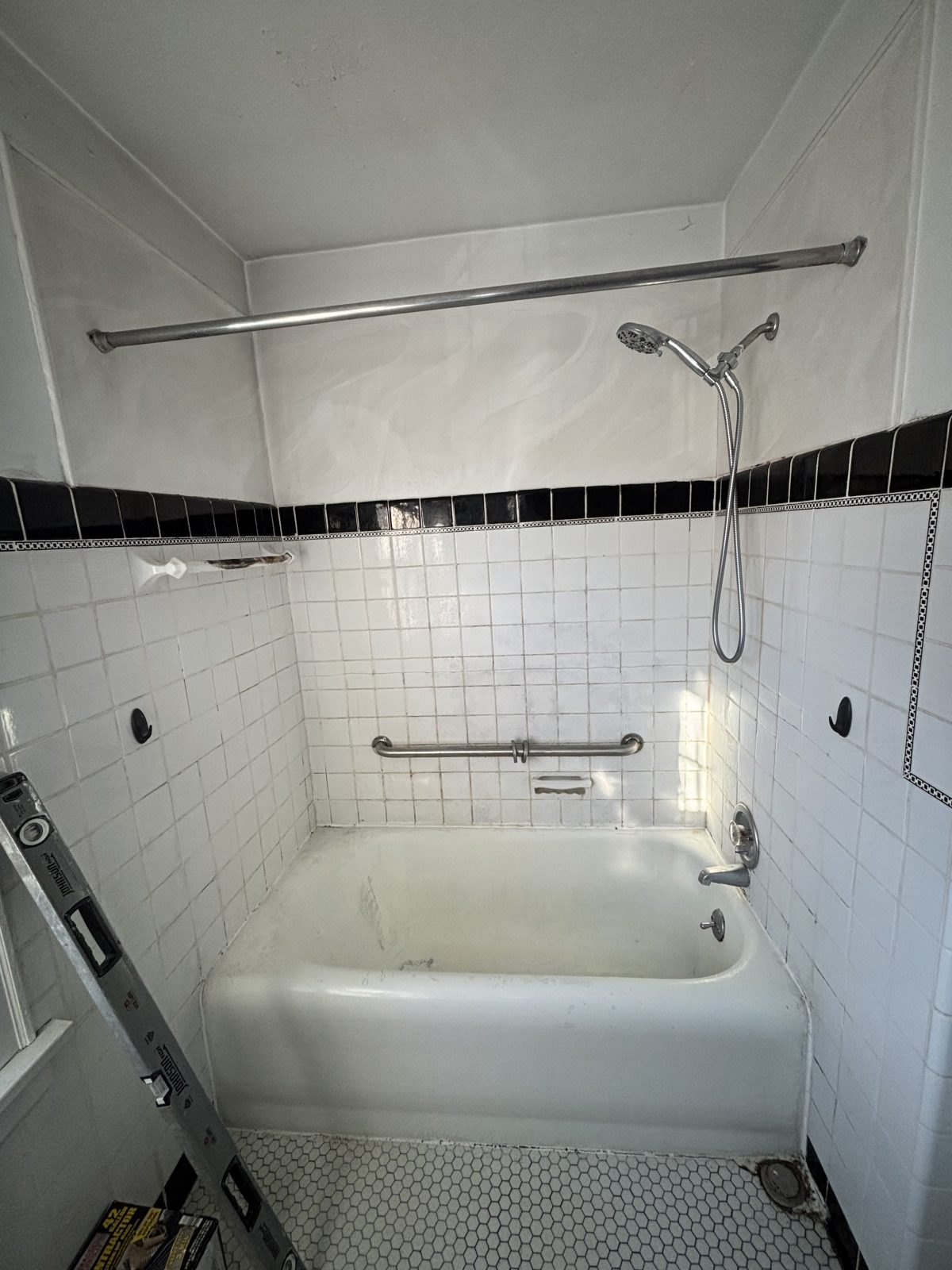
Homeowners sometimes ask whether that noise and vibration can damage the house. In a structurally sound home, no. The tub absorbs the impact and cracks; the energy doesn't transfer far. That said, it's worth taking pictures off the walls on the floor below for the day, and if you have a plaster ceiling underneath that's already cracked or sagging, mention it to your contractor ahead of time so they can adjust their approach.
There are situations where a crew will carry the tub out intact. First-floor bathrooms with a short, straight path to an exterior door are the obvious case. Clawfoot tubs are another — they aren't fastened into a framed alcove, and homeowners frequently want to keep or sell them, so those get carefully walked out and set on dollies.
If you want to save your tub, say so early. Once a demolition crew has planned for break-out, redirecting them mid-job costs time. And be realistic: a standard builder-grade alcove tub with enamel wear and a chipped rim has very little resale value. A genuine clawfoot or a pedestal-style tub in good shape is a different story.
The interesting part of a cast iron tub removal usually isn't the tub — it's what shows up once it's gone. Older alcove tubs sat directly on the subfloor, and the area beneath the drain is the single most common place we find water damage. Slow drain leaks don't announce themselves. They soak the subfloor and sometimes the joist below for years.
You'll also often find the original plumbing in whatever material the house was built with — galvanized steel supply lines in the oldest homes, which are prime candidates for replacement while the wall is open. And in houses built before the 1960s, the tub was frequently installed before the floor framing was fully enclosed, meaning there may be notched or drilled joists under there that need a look.
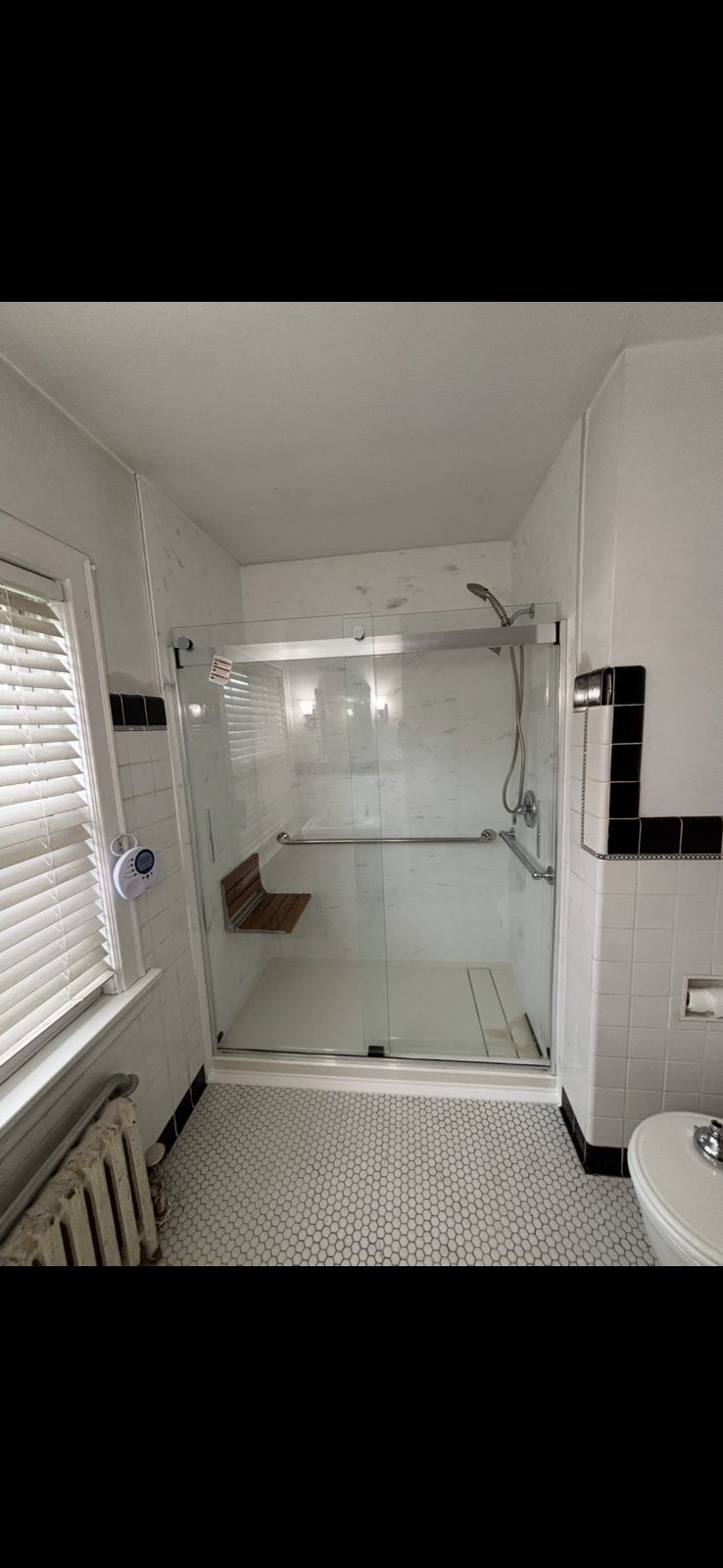
None of this is cause for panic. It's the normal reason a good contractor builds a contingency conversation into the project rather than pretending every wall will be clean. The fix for a soft spot under a tub is usually straightforward when the space is already opened up — far cheaper than discovering it three years later.
Demolition on a straightforward tub-to-shower conversion is typically a single day, and the tub removal is a portion of that. Breaking down and hauling out the cast iron might take a crew an hour or two. The rest of demo day goes to the surround, the old wall substrate, and prepping for the plumbing rough-in. Our tub-to-shower conversions start around $8,500 for a base package, and the removal of a standard cast iron tub is part of that work — not a surprise add-on.
If you've been putting off a conversion because you couldn't picture how the old tub would physically leave the house, that part is routine. We'd be glad to walk your bathroom, look at the access path, and give you an honest read on what's likely behind that tub. Reach out anytime for a free consultation.
Upgrade your home with a clean, modern look—without the stress, delays, or hidden costs. We specialize in efficient, high-quality remodels built to last.
Request your free estimate today!
Limited time offer – Get your free quote today!
Restrictions apply. Call for details.
Fill out the form below and one of our experts will reach out shortly.