

Fill out the form and our team will contact you shortly.
🔒 Your information is safe and secure.Streamline Home Improvement Blog
September 24, 2026
September 24, 2026
It's one of the first practical questions people ask once they get past the safety features and the door seal: "If that tub holds more water than my old one, am I going to run out of hot water halfway through?" It's a fair concern, and it's better to answer it before the tub is installed than after. The good news is that this is a solvable problem in almost every home — but it does need to be part of the conversation up front.
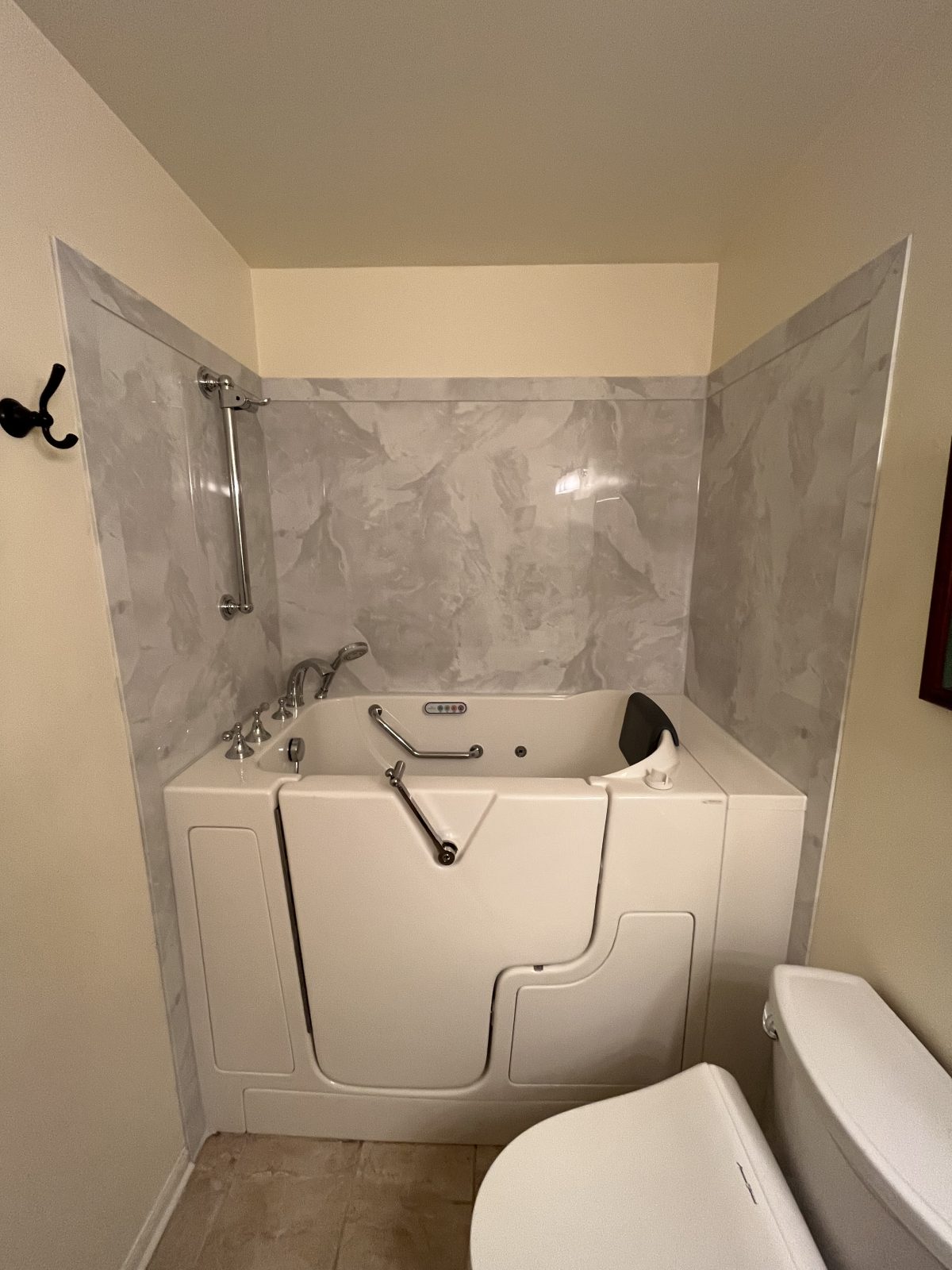
A standard alcove bathtub filled to a comfortable depth typically uses somewhere in the range of 40 to 50 gallons. Walk-in tubs vary quite a bit by model. Compact soaker styles designed to fit a standard 60-inch alcove often hold a similar amount of water to a regular tub, because the seat takes up volume that would otherwise be filled. Deeper models, wider models, and bariatric or two-seat designs can hold considerably more.
Here's the part that catches people off guard: you're not filling the tub with hot water. You're filling it with a mix. If you like your bath around 100 to 104 degrees and your water heater is set to 120, a meaningful share of that fill volume is cold water. So the question isn't really "how many gallons does the tub hold," it's "how many gallons of hot water does the tub need" — and that's a smaller number than the spec sheet suggests.
A 40- or 50-gallon tank doesn't deliver 40 or 50 gallons of usable hot water. As hot water leaves the top of the tank, cold water enters the bottom and mixes. In practice, you get a usable fraction of the tank before the temperature at the tap starts sliding. That's why a 40-gallon heater that handles showers perfectly well can still feel undersized when you ask it to fill a tub.
Recovery rate matters too. Gas water heaters generally reheat faster than comparable electric models, which is worth knowing if you're in a home with electric heat and you're planning to use the tub more than once in an evening.
This is the piece a lot of online advice skips. Incoming municipal water in Metro Detroit is dramatically colder in February than it is in July. Your water heater has to work harder to raise 40-degree water to 120 than it does to raise 60-degree water. The same tub that fills beautifully in August can leave you short in the middle of winter. If you're evaluating hot water capacity, evaluate it against a cold-weather scenario, not a summer one.
If the numbers don't work out, you have a few realistic paths. Upsizing the tank is the most common — moving from a 40 to a 50 or 65 gallon unit often solves it outright, assuming there's physical room and adequate venting. A tankless unit is another route, since it heats continuously rather than drawing from a reserve, though it needs the right gas line capacity and venting, which not every older home has without modification.
Many walk-in tubs also offer an in-line or heated-seat option that maintains water temperature during the soak. That doesn't create more hot water for the fill, but it does mean you don't need to top off with more hot water partway through a long bath — which is often where people actually run short.
Finally, there's the simple adjustment: raising the water heater's thermostat setting slightly means less hot water is needed per gallon of mixed fill. This should only be done with an anti-scald mixing valve in place and a clear understanding of the burn risk, especially in a home with grandchildren visiting.
When our team walks a home for a walk-in tub, we check the water heater's capacity, fuel type, age, and location relative to the bathroom, along with the supply line size feeding the tub. A tub that fills slowly because it's fed by an undersized line is a different complaint than one that runs cold, and the fixes aren't the same. We'd rather flag it during the estimate than have you discover it on the first bath.
If a walk-in tub is on your radar and you're not sure your hot water can keep up, we're happy to take a look and give you a straight answer. We're typically booked out two to three months, though rescheduling sometimes opens up sooner slots — so it's worth starting the conversation early. Reach out anytime for a free, no-pressure consultation.
Upgrade your home with a clean, modern look—without the stress, delays, or hidden costs. We specialize in efficient, high-quality remodels built to last.
Request your free estimate today!
Limited time offer – Get your free quote today!
Restrictions apply. Call for details.
Fill out the form below and one of our experts will reach out shortly.